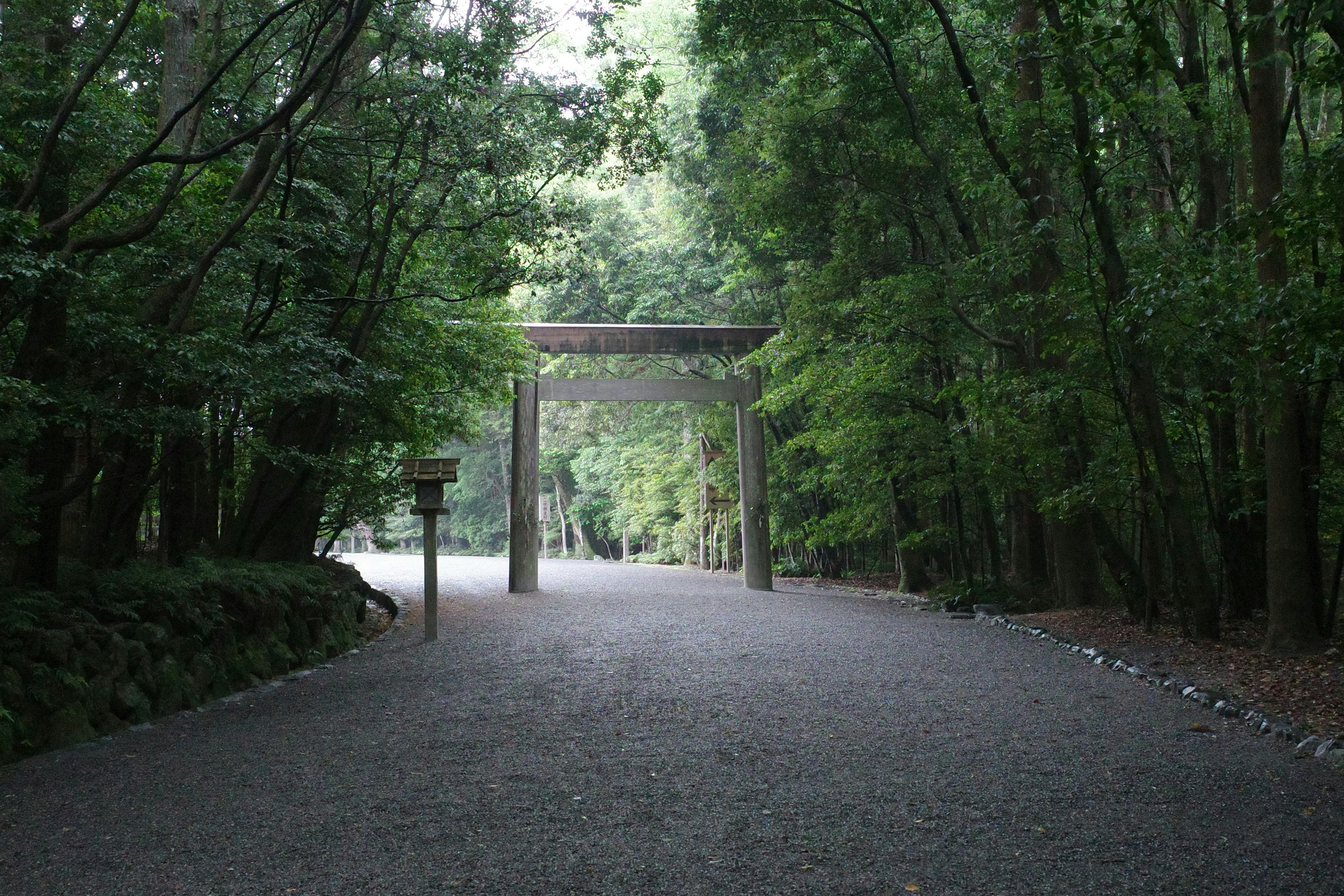
If you ask which is the single most sacred site in all of Japan, there is no debate. It is Ise Jingu — the Ise Grand Shrine. This is the spiritual home of Amaterasu, the sun goddess from whom Japan's emperors are said to descend, and the resting place of one of the country's Three Sacred Treasures, the holy mirror. For over a thousand years, ordinary Japanese people have saved for years to make the pilgrimage here at least once in their lives, a journey so beloved it earned its own affectionate name: Oise-mairi.
And yet Ise surprises most first-time visitors. There is no towering golden temple, no flashy main hall to photograph. Its power is quieter, and far stranger, than that. As a licensed guide, Ise is the place I most want travelers to understand before they arrive — because if you walk in expecting Kyoto, you will miss what makes it the holiest ground in Japan. Here is everything you need.
Not One Shrine, But 125125社からなる聖域
The first thing to understand is that "Ise Grand Shrine" is not a single building. It is a vast complex of 125 shrines scattered across Ise City in Mie Prefecture. But two of them matter most to a visitor, and the relationship between them shapes your entire trip.
Geku, the Outer Shrine, is dedicated to Toyouke, the deity of food, agriculture, and industry — the goddess who provides the sacred meals for Amaterasu.
Naiku, the Inner Shrine, is the holiest of all. It enshrines Amaterasu Omikami herself, the sun goddess and supreme deity of Shinto, and it is here that the sacred mirror — the Yata no Kagami, one of Japan's Three Sacred Treasures — is said to be kept. (If you'd like the full story of the mirror and its companions, see our guide to the Three Sacred Treasures of Japan.)
The two shrines sit about six kilometers apart, connected by a short bus ride.
The Pilgrimage Order: Why You Visit Geku First外宮先祭の作法
Here is the single most important piece of etiquette, and one most casual tourists get wrong: tradition holds that you visit Geku first, then Naiku.
The reasoning is beautifully Shinto. Toyouke, the deity of the Outer Shrine, is the one who prepares and provides the food for Amaterasu. So you pay your respects to the provider before approaching the supreme deity — honoring the order of service, not just rank. Following this sequence is part of doing Oise-mairi properly, and it is the kind of detail that turns a sightseeing stop into a genuine pilgrimage.
Plan for roughly an hour at Geku and 1.5 to 2 hours at Naiku. A thorough visit to both, with the bus ride between, comfortably fills half a day; add the approach streets and it becomes a full, unhurried day.
What You Will (and Won't) See: The Hidden Sanctuary見えない聖域
This is where Ise confounds expectations, so let me prepare you honestly.
At the heart of both Naiku and Geku stands the main sanctuary, the shoden — and you cannot see it. The sacred buildings are concealed behind several layers of tall wooden fences, and visitors are permitted only as far as the outer gate. From there, you bow and offer your prayer toward buildings you can barely glimpse: perhaps the upper roofline, the distinctive crossed finials (chigi) and the row of short logs (katsuogi) along the ridge.
For some visitors this is a letdown. For those who understand it, it is the whole point. The most sacred thing in Japan is kept deliberately out of sight — power preserved through concealment, exactly as with the Three Sacred Treasures themselves.
A note on photography: along the forest paths, torii, and Uji Bridge, photos are welcome and the setting is gorgeous. But near the main sanctuary, beyond the marked points, photography is forbidden. Watch for the signs and put the camera away when you reach them.
The Architecture: Reborn Every Twenty Years式年遷宮 / 二十年ごとの再生
Ise's greatest wonder is not how old its buildings are. It is how new they are.
The shrines are built in a pure, ancient style called yuiitsu shinmei-zukuri — unpainted Japanese cypress, thatched roofs, raised floors resembling ancient rice granaries, assembled without a single nail. This style predates Buddhism's arrival in Japan and shows almost no influence from mainland Asia, making it uniquely, originally Japanese.
And then comes the astonishing part: every twenty years, the entire main shrines, their bridges, and their sacred treasures are rebuilt completely from scratch on an adjacent plot of land, and the deity is moved into the new building in a grand ceremony. This is the Shikinen Sengu (式年遷宮). The most recent rebuilding, the 62nd, was completed in 2013; the 63rd is scheduled for 2033.
Why destroy and rebuild perfection every two decades? The idea is tokowaka — "eternal renewal." Rather than preserving old timber, Ise preserves the craft itself, passing the techniques from master to apprentice across generations. The shrine is forever ancient and forever brand new at the same time. It is, to me, one of the most profound ideas in all of Japanese culture: permanence achieved not by resisting change, but by embracing renewal. If you visit near 2033, you may even see the new and old sites side by side.
Practical Guide for Visitors実践ガイド
- Getting there
- Ise is more accessible than its remoteness suggests. From Osaka (Namba), the Kintetsu limited express reaches Ise in about 90 minutes; from Nagoya, around 80–90 minutes. Most visitors arrive at Iseshi Station, a short walk from Geku — which conveniently lines up with the Geku-first pilgrimage order.
- Cost
- Entry to Ise Jingu is free.
- When to go
- Early morning is magical — quieter, cooler, and the low light through the cryptomeria forest is unforgettable. Any season works; the sacred forest is beautiful year-round.
- Don't skip Okage Yokocho & Oharaimachi
- The charming traditional streets leading to Naiku, lined with old wooden shops and food stalls. Try the famous Akafuku mochi, a local pilgrimage treat for centuries.
- Etiquette & goshuin
- If you're unsure how to bow, purify your hands, and pray at a Shinto shrine, our Shrine vs Temple Guide walks you through it. And consider receiving a goshuin stamp as a memento — see our Goshuin Guide.
Frequently Asked Questionsよくあるご質問
Why do you visit the Outer Shrine (Geku) before the Inner Shrine (Naiku)?
Can I see the main shrine building at Ise?
Why is Ise Grand Shrine rebuilt every 20 years?
How long does a visit take, and how much does it cost?
How do I get to Ise?
What is the sacred mirror kept at Ise?
Stand Where Japan Beginsむすびに
Ise Grand Shrine asks something unusual of a visitor: to find awe in what you cannot see. There is no spectacle here, only a deep, living current of belief that has flowed for two thousand years and is made new every twenty. Walk the forest, cross the Isuzu River, bow at the gate — and you'll understand why generations of Japanese have called the journey to Ise the trip of a lifetime.
When you're ready to build your own pilgrimage, the shrines and sacred sites we cover throughout Sacred Japan will help you plan the way.
Unseen, eternal, renewed — Ise Jingu, the heart of Japan.